Why serums carry the highest stakes in a luxury routine
A serum is a concentrated formula, and market-positioning research describes it as a product type gaining traction for precision in addressing concerns such as pigmentation and wrinkles. That concentrate is what makes serums different from cleansers and moisturizers: they are typically lightweight, fast-absorbing products designed to deliver key ingredients to the skin, often at higher concentrations than a cream would carry.
Because serums concentrate actives, the gap between a well-formulated luxury serum and a poorly formulated one is larger than the gap between two average moisturizers. Packaging beauty is not evidence of formulation quality, and the most reliable proxy for what a serum will do remains the ingredient list evaluated for concentration, form and combination. A serum that lists a famous active without enough of it, or in a form that degrades before it reaches your skin, is an expensive bottle of texture.
The stakes also run the other way. Luxury pricing is a positioning choice, not a regulatory category. One market report summarizing U.S. practice describes the FDA as classifying skincare products by intended use, with therapeutic claims such as treating acne or reducing wrinkles placing a product in the drug category and cleansing or moisturizing claims placing it in the cosmetic category. The same summary states that terms such as clinically proven and dermatologist-tested are not subject to mandatory substantiation. These are reported characterizations rather than statements from the regulator, and they are worth verifying against the FDA's own pages before you rely on them. What does follow from them is a practical habit: the label on a luxury serum deserves the same scrutiny you would give a mid-range one, and the price premium should be justified by the formula rather than the logo.
Sources: Market.us, CNN Underscored, Mengotti Couture, Market Data Forecast
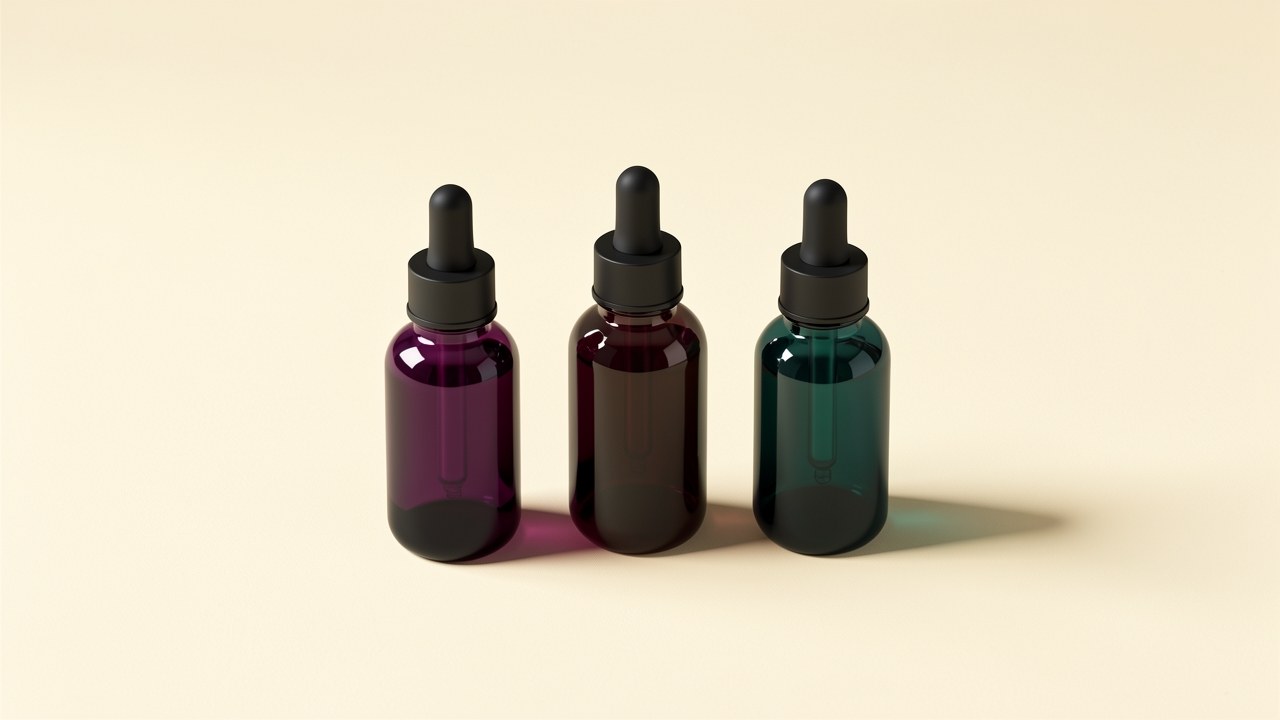
Comparison criteria: what to evaluate before you spend
Consistent criteria are what make a luxury serum comparison meaningful. If you compare one serum on its hero ingredient and another on its texture, you learn nothing about which is the better buy. Use the same five or six questions for every candidate, and record the answers somewhere you can revisit as product lines are reformulated.
The criteria below are stable enough to survive product launches and discontinuations. Named products and their prices change frequently, so the framework is the durable part; the specific bottles you slot into it are the variable part.
- Active ingredients and their form: which actives are present, and in which chemical form. Retinol, for example, is a well-studied over-the-counter retinoid, but it is roughly ten-fold less potent than prescription tretinoin, so the form matters as much as the name.
- Concentration signals: what the label, brand materials or ingredient list position suggests about how much active is present. Luxury formulations are often described as delivering actives at higher concentrations than mass-market alternatives, which may use the same ingredient at a level sufficient to appear on the label but insufficient to produce a meaningful clinical effect. Treat that as a stated distinction rather than a measured finding.
- Delivery format: bottle, dropper, airless pump, or sealed single-use ampoule. Active ingredients that degrade on contact with air or light are the reason packaging logic matters, and airless dispensers, UV-protective glass and vacuum-sealed formats are described as protecting formulations from oxidation and contamination in ways simpler packaging cannot.
- Supporting ingredients: humectants, emollients, antioxidants, pH adjusters and preservatives. A serum is a system, not a single active, and the supporting cast determines how the active behaves and how the product feels.
- Sensory and layering behavior: viscosity, absorption speed, residue profile and how the serum layers with the products that follow it. As one retailer editorial argues, products that feel good to use are used consistently, and that consistency can matter more than a single superior application.
- Packaging integrity: whether the format protects the formula, not whether it photographs well. A beautiful bottle that exposes a light-sensitive active to daylight is a formulation liability.
Sources: Women's Health, Mengotti Couture
Concentration signals: reading the label without overreading it
Higher concentration is not automatically better. A 2020 twelve-week, double-blind, controlled trial reported in consumer health coverage compared retinol serums at 0.25%, 0.5% and 1.0% with prescription tretinoin creams at 0.025%, 0.05% and 0.1% using a step-up protocol, and the retinol formulations reportedly performed as well as or better than the tretinoin creams. That result should not be generalized to all retinol serums, all skin types, or to non-retinol actives, but it illustrates a useful principle: the relationship between concentration and outcome is not a straight line.
What concentration signals can tell you is whether an active is present at a level plausibly associated with an effect, whether it is in a stable form, and whether the surrounding formula supports it. What they cannot tell you is how any specific serum will perform on your skin.
Retinoids illustrate the mechanism clearly. They bind to retinoic acid receptors in the skin, promoting cell turnover, increasing collagen and elastin production, and reducing fine lines and wrinkles. A 2022 Advances in Therapy review describes retinol as the most studied over-the-counter retinoid in randomized, double-blind, vehicle-controlled clinical trials and reports that it increases the skin's production of hyaluronic acid, collagen and elastin and increases cellular turnover. Those are mechanism-level statements, not comparative performance claims between brands or concentrations.
- Check the form of the active, not just the name. Retinol and adapalene are not interchangeable, and adapalene — once prescription-only — is now available over the counter in the United States, where it is the active ingredient in Differin.
- Read the ingredient list with concentration, form and combination in mind, which is the most reliable proxy available for formulation quality.
- Distinguish mechanism claims from results claims. A serum can truthfully contain an active that does something in the skin without that something being strong enough, in that formula, to change your skin.
Sources: Women's Health
How to compare cost per use across bottle sizes and concentrations
Price per bottle is the least useful number in a luxury serum comparison, because bottle sizes, recommended doses and concentration levels all vary. The more honest comparison is cost per use: the price divided by the number of uses a bottle realistically provides for you.
You can build this figure yourself without any tool. Divide the price by your typical number of drops or pumps per application to get cost per application, then multiply by your weekly usage to get a weekly or monthly cost. The two inputs that matter are price and your own usage rate; you can read both off the bottle and your own habit.
Two cautions are worth keeping in mind. First, a higher-concentration formula may call for a smaller or less frequent dose, which changes the math. Second, a serum you use consistently is a better value than a cheaper one that sits unused because it feels unpleasant. Cost per use is a decision aid, not a score.
Sources: Mengotti Couture
Do two serums overlap or duplicate each other?
Once you have a few candidates, the next question is whether they are actually different. Two serums can share a hero ingredient and still do different jobs, or they can be near-duplicates that leave you paying twice for the same effect.
The practical method is to place the two ingredient lists side by side and mark what they share and what differs. Comparison tools exist that do this systematically, placing two products next to each other to surface shared versus differing ingredients, and you can replicate the exercise with two printed labels and a highlighter. What matters is that you are comparing like with like: the same function, the same active, the same position in the routine.
- Same active, same form, same rough concentration: likely a duplicate. Pick based on texture, packaging protection or price per use.
- Same active, different form: not a duplicate. A retinol serum and an adapalene serum are doing different things even though both are retinoids.
- Different actives, same role: potentially interchangeable. Decide which mechanism you actually want.
- Different actives, different roles: complementary, not duplicative — as long as your skin tolerates layering both.
Sources: SkinSort
Matching serum actives to general skin concerns
Consumer coverage characterizes serums as a top pick across concerns including fine lines, acne, dark spots and dry skin, often because they deliver key ingredients at higher concentrations than leave-on creams. That is consumer education, not clinical guidance, and nothing here is a diagnosis or a treatment recommendation.
The useful way to think about matching is by mechanism rather than by product name. If your concern is the appearance of fine lines, actives that support collagen and elastin production and increase cellular turnover are the relevant category, which is why retinoids dominate that conversation. If your concern is uneven tone or dark spots, look at the category of actives aimed at pigmentation. If your concern is dryness or a compromised-feeling barrier, humectants and barrier-supporting ingredients in the supporting cast matter more than the hero active.
Two boundaries apply. First, a serum is not a substitute for a dermatologist's assessment, and no serum comparison can tell you what your skin needs. Second, in the United States, a product that claims to treat acne or reduce wrinkles is making a drug claim under FDA intended-use rules according to one market-data summary, which is a different regulatory category from a product marketed for cleansing or moisturizing. That distinction is about how claims are regulated, not about whether any particular serum works.
Sources: CNN Underscored, Market Data Forecast
Building a personal serum shortlist
The shortlist is where the criteria turn into a decision. Work through these steps in order, and stop when a candidate fails a criterion you actually care about rather than scoring everything on everything.
- Name the concern you are buying for. Write it down as one sentence so you can hold the shortlist to it.
- Identify the active category that addresses that concern at a mechanism level, not a brand level.
- For each candidate, record the active, its form, the concentration signal from the label, and the delivery format.
- Compare cost per use using the price and your own typical dose and frequency, not the price per bottle.
- Check overlap against the serums you already own. Remove duplicates before you add anything.
- Set a re-verification date. Named-product prices, brand formulations and market positioning change frequently, so revisit the shortlist periodically rather than treating it as permanent.
Sources: SkinSort, Mengotti Couture
Side-by-side category and decision-criteria matrix
The matrix below is a template for the comparison itself. It compares categories and decision criteria rather than named products, and you can copy it into a notes file and fill in the cells with data from the labels in front of you. Keeping the columns fixed is what makes the comparison fair; if you add a column, add it for every row.
| Criterion | What to record | Why it matters | Where to find it |
|---|---|---|---|
| Active ingredient and form | The exact active name and chemical form | Form determines what the ingredient can do in the skin | Ingredient list |
| Concentration signal | Whether the active appears high or low in the list, plus any stated percentage | Presence on a label is not the same as a meaningful amount | Ingredient list and brand materials |
| Delivery format | Dropper, airless pump, sealed ampoule or other | Some actives degrade on contact with air or light | Packaging |
| Supporting ingredients | Humectants, emollients, antioxidants, pH adjusters, preservatives | The supporting formula determines how the active behaves and feels | Ingredient list |
| Sensory and layering behavior | Viscosity, absorption speed, residue, how it layers | Products that feel good are used consistently, and consistency can matter more than a single superior application | Your own trial |
| Cost per use | Price divided by your typical dose and usage rate | Bottle price alone hides differences in size and concentration | Retail listing plus your own usage |
| Overlap with serums you own | Shared versus differing ingredients against your current routine | Prevents paying twice for the same effect | Side-by-side ingredient comparison |
Sources: Mengotti Couture, SkinSort
Frequently asked questions
Are luxury serums meaningfully different from mid-range serums?
The category label does not guarantee a difference. Luxury skincare is defined by premium positioning, substantial price points and high-quality ingredients rather than by any regulatory standard; no governing body distinguishes a luxury formulation from a standard one. One commonly stated distinction is that luxury formulations deliver actives at higher concentrations than mass-market alternatives, which may use the same ingredient at a level sufficient to appear on the label but insufficient to produce a meaningful clinical effect. That is a stated distinction from commercially interested sources, not a measured market-wide finding. The practical move is to compare the two on the criteria that actually matter — active form, concentration signal, delivery format and cost per use — rather than on price tier.
Sources: Market.us, Mengotti CoutureDoes a higher serum concentration always mean better results?
No, and the evidence supports caution here. A 2020 twelve-week, double-blind, controlled trial reported in consumer health coverage compared retinol serums at 0.25%, 0.5% and 1.0% with prescription tretinoin creams at 0.025%, 0.05% and 0.1% using a step-up protocol, and the retinol formulations reportedly performed as well as or better than the tretinoin creams. That finding should not be generalized to all retinol serums, all skin types or to non-retinol actives, and the metrics used are not clearly specified in the coverage. What concentration signals can tell you is whether an active is plausibly present at a meaningful level and in a stable form; they cannot tell you how a specific formula will perform on your skin.
Sources: Women's HealthHow should I compare serums with the same active ingredient?
Compare them on the parts that still differ. Start with the form of the active, because retinol and adapalene, for example, are not interchangeable even though both are retinoids. Then compare the concentration signal, the delivery format — a dropper exposes the formula to air in a way a sealed ampoule does not — and the supporting ingredients that determine how the active behaves and how the product layers. Finally, compare cost per use rather than bottle price. Placing the two ingredient lists side by side and marking shared versus differing ingredients is the fastest way to see whether you are looking at a real alternative or a near-duplicate.
Sources: Women's Health, Mengotti Couture, SkinSortWhy does packaging matter more for serums than for other products?
Because serums concentrate actives, and some actives degrade on contact with air or light. Airless pump dispensers, UV-protective glass and vacuum-sealed packaging are described as protecting formulations from oxidation and contamination in ways that simpler packaging cannot, and single-use sealed glass ampoules are described as delivering a precise dose in a sealed format. These are formulation-logic statements rather than measured stability results, but the underlying principle is sound: a delivery format that exposes a light-sensitive or oxidation-prone active to the environment works against the formula inside it. This is also why packaging beauty is not evidence of formulation quality; the most reliable proxy remains the ingredient list itself.
Sources: Mengotti Couture, BABOR (US)Can I use cost per use if brands do not publish usage durations?
Yes, but you supply the usage rate yourself. Divide the price by the number of applications you get from the bottle, using your own typical dose and frequency rather than a manufacturer estimate. That converts a comparison you cannot make from listings alone into one you can make from things you already know. Keep in mind that a higher-concentration formula may call for a smaller or less frequent dose, which changes the arithmetic, and that a serum you use consistently is a better value than one that sits unused. Cost per use is a decision aid, not a score.
Sources: Mengotti CoutureSources
- The Only 4 Skincare Ingredients Proven To Work, According To Research — Women's Health
- 36 best face serums of 2026, dermatologist-approved | CNN Underscored — CNN Underscored
- Compare Skincare & Cosmetics (Ingredients Side-By-Side) | SkinSort — SkinSort
- The Difference Between Regular and Luxury Skincare Products — Mengotti Couture
- 7 Best Luxury Skincare Brands for Aging Skin — BABOR (US)
- Luxury Skincare Market Size, Share, Demand | CAGR of 8.7% — Market.us
- North America Skincare Market Size, Share and Analysis, 2034 — Market Data Forecast