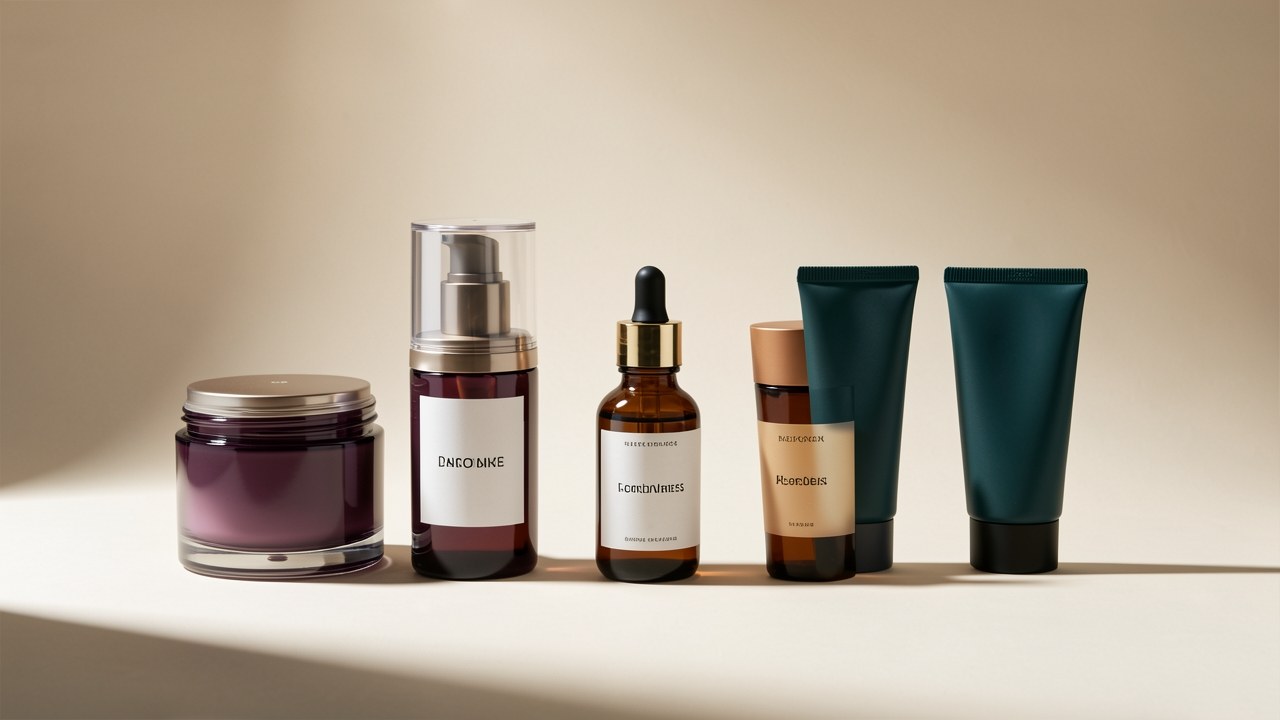
What 'luxury skincare' means in this guide
On this site, luxury skincare products means products sold in a premium price tier above mass-market lines, usually through department stores, specialty beauty retailers, brand boutiques and brand-operated e-commerce. The word luxury describes positioning, price band and purchase experience more than it describes a measurable performance class.
That framing is not ours alone. Yon-Ka Paris, a brand-published guide, states that in skincare 'luxury' usually refers to brand positioning, sensorial design such as texture and scent, packaging materials and service model, and that the most useful consumer definition is a premium price tier that emphasises experience and presentation in addition to skin benefits. We use that as a working definition precisely because it is a brand describing its own tier.
The practical consequence is simple: a luxury label is a starting point for evaluation, not a conclusion. Every claim in this guide is applied to the product on the shelf or the page, not to the tier.
- Luxury is a price and positioning tier, not a regulated or clinical category.
- Two products in the same tier can differ widely in formulation quality, active choice and tolerability.
- The useful question is always what the specific product does for a specific skin need at its specific price.
Sources: Yon-Ka Paris (brand site)
Six criteria for judging a premium formula
A premium price should be justified by something you can describe. The criteria below give you a repeatable way to judge a formula before you commit to it, whether you are reading a product page, a counter consultation or an ingredient list.
Formulation logic asks whether the ingredients are arranged to support each other: a well-preserved base, functional actives, humectants and emollients that make the product usable, and no obvious conflicts. Yon-Ka notes that preservatives and functional base ingredients are necessary components of a formulation, so a premium product should still be judged on whether it handles basics such as preservation rather than on featured actives alone.
Active ingredients matter more than their marketing names. Ask what the ingredient is generally used for, whether it appears in a legally compliant way on the U.S. label, and whether the rest of the formula supports it. Concentration is the part consumers rarely see: unless the brand publishes a percentage, you cannot know how much active is present, and this guide does not translate a featured ingredient into a promised strength.
Delivery format and packaging affect how the formula is dispensed, protected and dosed. Yon-Ka's guide mentions airless pumps and jar hygiene, which is a reasonable prompt to think about how the packaging protects the product and how easily it is contaminated by fingers or air.
Packaging cost and brand spend are real parts of the price, and they are treated in the next section. Realistic expectations are the sixth criterion: a cosmetic can improve the look and feel of skin over time, but no price tier converts a cosmetic into a treatment for a medical condition. If a concern is medical, it belongs with a licensed clinician rather than a product comparison.
- Formulation logic: a preserved, coherent base that supports the featured actives.
- Active ingredients: what the ingredient is generally used for, and whether the label is compliant.
- Concentration: demand the published percentage or accept that it is unknown.
- Delivery format and packaging: pumps, droppers and jars change dose control and hygiene.
- Packaging and brand spend: an honest part of the price, separate from the formula.
- Realistic expectations: cosmetic benefits over time, not medical outcomes.
Sources: Yon-Ka Paris (brand site)
How price relates to formulation versus brand and packaging
The honest answer is that no single published share explains a luxury price, and this guide will not pretend otherwise. What can be said with reasonable confidence is that packaging and branding carry real, measurable weight in how cosmetic products are presented and perceived.
Research published in SN Business & Economics reports that cosmetics packaging design elements — colour, shape, images, material and convenience — are used to communicate brand quality and differentiate products, and that a substantial share of purchase decisions occurs at the point of sale where packaging is the consumer's first impression. The same research states that visual packaging cues are processed rapidly and that design and marketing are presented as inextricably linked in cosmetic branding, so packaging is a cost and value driver distinct from the formula. That research cites point-of-sale figures in the 70–73 per cent range from other works, so treat those as the article's reported figures rather than as an audited industry statistic.
Other supplied commentary is less authoritative but still illustrative. LUXUO reports that La Mer's Crème de la Mer is priced at roughly USD 625 for a 60 ml jar and up to about USD 1,000 for a 250 ml jar, and attributes the premium to proprietary formulation, research and development, patents and constructed brand identity. Those are the outlet's stated retail figures, may vary by retailer and date, and are not audited U.S. price data. LUXUO also states that luxury skincare pricing is partly driven by marketing storytelling, scarcity positioning, retail environments, consultations and premium packaging, and that whether a very expensive cream is 'worth it' is subjective and depends on emotional connection as well as measurable results.
On cost structure, a creator commentary by Liah Yoo states that Estée Lauder reported a gross margin near 80 per cent with a five-year average around 80 per cent, and that roughly 20 per cent of a USD 100 cream would represent cost of goods sold including research and development, raw materials, formulation, packaging, logistics and testing, with operating, marketing, distribution and overhead expenses reducing the eventual profit to around 10 per cent. The same commentary states that retailer distribution costs can consume roughly 50 to 70 per cent of a beauty product's price, and that some brands have spent around 40 per cent of revenue on paid advertising. The author discloses ownership of KraveBeauty, is not a cosmetic chemist, and presents these as a reading of public filings. Use them as one attributed breakdown, not as a general industry rule.
A separate commentary by Luxe Audit reports that a serum priced near USD 166 for 30 ml and a serum costing about USD 6 per ounce can share the same first five ingredients in the same order — water, butylene glycol, dimethicone, glycerin and niacinamide — implying that price alone does not indicate a different active-ingredient base. The comparison is anonymised, no verified product labels were supplied, and it should be read as an illustrative example only. The same commentary reports acquisition figures of approximately USD 500 million for Tatcha by Unilever in 2019 and USD 845 million for Drunk Elephant by Shiseido in 2019, and states that the brands had no exclusive patents or independent peer-reviewed clinical data for their core formulas at the time. Those patent and trial statements are the source's assertions.
Taken together, the reasonable conclusion is not that premium products are mostly packaging. It is that price is a mixed signal: some of it can reflect research, ingredient sourcing and formulation work, and some of it reflects branding, retail margin, distribution and advertising. Your job as a buyer is to decide how much of each you are willing to pay for.
- Packaging and branding are documented drivers of perceived quality and point-of-sale decisions.
- One attributed breakdown of public filings puts cost of goods near 20 per cent of a USD 100 cream, with retail distribution potentially consuming 50–70 per cent of price.
- Reported luxury retail prices — such as the La Mer figures above — are the outlet's stated figures, not audited U.S. market data.
- A single anonymised ingredient-list comparison cannot prove that price and formula are unrelated, but it is a fair warning not to assume price equals active content.
- No verified U.S. cost-per-unit or brand-spend dataset was available for this page, so treat any single percentage with caution.
Sources: SN Business & Economics (via PMC, NIH/NLM), LUXUO, Liah Yoo (YouTube; creator discloses ownership of KraveBeauty), Luxe Audit (YouTube)
Category map: cleansers, serums, moisturizers, masks, eye creams and SPF
Luxury tiers exist across the whole routine, and each category asks a different value question. Cleansers are contact-time products: they are rinsed off, so the sensible question is whether the formula cleans without leaving the skin uncomfortable, not whether it carries headline actives. Serums carry the highest concentration of leave-on actives in most routines and are where ingredient and concentration scrutiny pays off most.
Moisturizers are the category where daily use and tolerability matter most, because you apply them twice a day and a poor fit compounds. Masks are periodic treatments; value depends on how often you will realistically use them. Eye creams sit in a sensitive area, so texture and fragrance load deserve attention. SPF is a functional category where the protection claim and the label matter more than the tier, and where a luxury price does not change the underlying sun-protection principle.
One commercial market-research summary estimated that luxury skincare creams accounted for approximately 28 per cent of luxury skincare product demand, moisturizers about 22 per cent, serums about 32 per cent, facial masks about 10 per cent, cleansers about 12 per cent, body milk about 8 per cent and other products about 8 per cent, with serums described as the fastest-growing category. Those are the publisher's estimates, are not independently verifiable from the supplied content, and are reported here with the year as market context rather than as verified statistics. The same summary reports that in 2024 more than 70 per cent of American luxury skincare consumers considered ingredient transparency an important purchasing factor, and that about 35 per cent of U.S. luxury skincare purchases were associated with anti-aging products while nearly 30 per cent focused on hydration and barrier repair. Treat these as unaudited commercial estimates.
A separate commercial summary identifies skincare as the dominant product segment of the luxury cosmetics market, with e-commerce as the leading distribution channel and North America as the second-largest region behind Europe, driven partly by U.S. millennial and Generation Z spending. Again, this is secondary market context, not a verified industry census.
| Category | What you are mainly paying for | Evaluation focus |
|---|---|---|
| Cleanser | Texture, rinse-off experience, packaging | Gentle cleansing and comfort rather than featured actives |
| Serum | Active ingredients and concentration | Ingredient function, published percentages where available, routine fit |
| Moisturizer | Daily tolerability and barrier support | Repeat-use comfort, fragrance load, consistency |
| Mask | Periodic treatment and sensorial experience | How often you will actually use it and what it adds |
| Eye cream | Texture and targeted care in a sensitive area | Tolerability, fragrance and application format |
| SPF | Functional protection and finish | The protection claim and label rather than the price tier |
Sources: Business Research Insights, Market.us
When luxury skincare is worth it, and when mid-range fits better
Luxury is worth it when the specific product solves a specific problem better than the alternatives you can reasonably buy: a texture you will actually use twice a day, a formula you tolerate, a format that protects the ingredients, or an active strategy you cannot match at a lower tier.
Two industry-side sources reach the same qualified position from different directions. Yon-Ka Paris states that a higher price does not guarantee better suitability for a person's skin and that products should be evaluated on ingredient function, stability, irritation risk and fit within a routine. Motif Skincare, a brand site, states that choosing luxury does not necessarily mean a more effective result, but argues premium prices can be justified when brands genuinely invest in research and development, higher-quality ingredients, effective concentrations and superior sensory packaging. Motif is brand-published and self-interested, so read that as an industry-side position rather than an independent finding.
Mid-range is the better fit when the value you want is functional: a well-formulated cleanser, a straightforward moisturizer, a sunscreen you will reapply, or a single active you are still learning to tolerate. The money saved there can be redirected to the one or two steps where formulation differences are most likely to matter to you.
A word of caution on tolerability. Yon-Ka notes that luxury formulas often contain essential oils and fragrance components as part of the sensorial goal, and that these can increase irritation risk for some people, particularly those with sensitive or reactive skin. That is a general tolerability statement, not personalised advice, and it is one reason a premium texture can still be the wrong product for a given person.
- Luxury earns its price when texture, tolerability, format or active strategy clearly outperform the cheaper alternative for you.
- Mid-range wins on functional basics you will use consistently.
- Brand-side sources acknowledge price does not guarantee better results.
- Fragrance and essential oils can raise irritation risk for reactive skin.
Sources: Yon-Ka Paris (brand site), Motif Skincare (brand site)
How to use this site: paths for price, ingredients, comparisons, claims and skin concerns
This homepage is the entry point, not the whole guide. Each of the sections below leads to a focused page so you can go straight to the decision you are actually making.
If price is your main question, start with the price and value guide and the splurge guide, which set out how to decide whether a premium step earns its place. If you want to read a label properly, the ingredient and label guide explains how to work through an ingredient list in order. For head-to-head decisions, the serum comparison and moisturizer comparison apply the same criteria across products in those categories. If a marketing claim is doing the persuading, the marketing claims page shows how to separate what a claim can and cannot mean. If you are starting from a skin concern, the skin concern matching guide works the other way round, from the concern to the product format.
- Price and value guide — whether a premium step is worth its cost.
- Ingredient and label guide — how to read a formula in order.
- Serum comparison and moisturizer comparison — category-level product evaluation.
- Marketing claims — how to read persuasive language on packaging.
- Splurge guide — which single premium purchase tends to matter most.
- Skin concern matching — start from the concern instead of the product.
- Decide what you are actually trying to solve.
- Read the ingredient list before the marketing copy.
- Check whether the concentration or active percentage is published.
- Compare the format and packaging against how you will use it.
- Decide what part of the price you are willing to pay for experience.
- Buy one step at a time and give it a fair trial before adding another.
Sources: Yon-Ka Paris (brand site)
Editorial independence
This site is an independent editorial guide, not a retailer or a brand. That matters because a large share of easily searchable skincare information is published by companies selling the product, and even careful brand guides are written with a commercial interest.
Where a source is brand-published or creator-led, we attribute it as such in the text and treat it as low weight. Where a source is peer-reviewed, it carries more weight, but it still only supports the specific claim it makes. Percentage figures from commercial market-research summaries are labelled as reported estimates with a date, not as verified statistics, because they could not be corroborated against a second publisher.
Several things this page deliberately does not do: it does not name a best product, it does not quote current U.S. prices as verified data, and it does not state U.S. cosmetic or drug claim rules as settled because no regulator source was available for this page. Where the evidence stops, the guide stops rather than filling the gap with a plausible guess.
- Independent editorial; no brand or retailer ownership of this content.
- Peer-reviewed research is weighted above brand and creator commentary.
- Market-research percentages are reported as unaudited estimates.
- Named-product rankings and current verified U.S. prices are not published here.
Sources: SN Business & Economics (via PMC, NIH/NLM), Yon-Ka Paris (brand site), Business Research Insights
Frequently asked questions
Is luxury skincare always better than mid-range skincare?
No. A higher price does not guarantee better suitability for your skin, and products still need to be judged on ingredient function, stability, irritation risk and fit within your routine. Even brand-published sources make this point. The tier tells you where a product sits in the market, not whether it will work for you.
Sources: Yon-Ka Paris (brand site), Motif Skincare (brand site)Which luxury skincare categories give the most noticeable value for the price?
Serums and moisturizers are the two categories where formulation choices are most likely to matter to you, because serums carry the highest concentration of leave-on actives and moisturizers are used twice a day, so tolerability compounds. Cleansers are rinsed off, and SPF value depends on the protection claim and whether you will wear it consistently rather than on the price tier. One commercial market-research summary reports serums as the fastest-growing luxury category, though those figures are the publisher's estimates rather than verified statistics.
Sources: Business Research InsightsDo higher prices guarantee better ingredients or results?
No. Price is a mixed signal. Some of it can reflect research, ingredient sourcing and formulation work, and some reflects branding, retail margin, distribution and advertising. One attributed breakdown of public filings suggests cost of goods may be around 20 per cent of a USD 100 cream, with retailer distribution potentially consuming 50 to 70 per cent of the price, but that is one creator's reading of filings and not a general rule. An anonymised ingredient-list comparison also reported a luxury serum and a low-cost serum sharing the same first five ingredients in the same order, which is a fair warning not to treat price as proof of a stronger active base.
Sources: Liah Yoo (YouTube; creator discloses ownership of KraveBeauty), Luxe Audit (YouTube)How should I start evaluating a luxury skincare product before buying?
Start from the problem you want to solve, then read the ingredient list before the marketing copy. Check whether the active percentage or concentration is published, because if it is not, you cannot know how much is present. Look at the format and packaging for how well they protect and dose the product, and decide how much of the price you are paying for experience versus function. If you have reactive or sensitive skin, note that luxury formulas often include essential oils and fragrance for sensorial reasons, which can raise irritation risk for some people. Buy one step at a time and give it a fair trial.
Sources: Yon-Ka Paris (brand site)Can a full luxury routine be justified, or is a focused approach better?
A focused approach is easier to justify with evidence. Concentrate your spending on the one or two steps where formulation differences most affect your outcome — usually a serum and a moisturizer — and keep the functional basics simple. Both brand-side sources used on this page acknowledge that luxury does not automatically mean a better result, so building a full premium routine does not, by itself, add value. If your routine already works, adding premium steps mostly changes the experience and the cost.
Sources: Yon-Ka Paris (brand site), Motif Skincare (brand site)Why does this site avoid naming a single best luxury product?
Because no verified comparison of named products across the same supported attributes was available for this guide, and inventing one would mislead you. Rather than ranking products on unverified data, this site compares categories and decision criteria — how to judge a serum, a moisturizer, a cleanser, a mask, an eye cream or an SPF — and lets you apply the framework to the specific products on offer. Industry sources on this page also acknowledge that the 'worth it' question depends on individual priorities, not on a universal ranking.
Sources: LUXUO, Yon-Ka Paris (brand site), Motif Skincare (brand site)How much of a luxury skincare price goes to packaging and branding?
There is no independently verified percentage for this. What is documented is that packaging design communicates brand quality and differentiates products, and that a substantial share of purchase decisions happens at the point of sale where packaging is the first impression — reported in one peer-reviewed study as figures in the 70 to 73 per cent range drawn from other works. One creator commentary attributes roughly 20 per cent of a USD 100 cream to cost of goods and estimates that retail distribution can consume 50 to 70 per cent of a product's price. Those figures are attributed estimates, not audited U.S. data, so treat them as context rather than a cost breakdown.
Sources: SN Business & Economics (via PMC, NIH/NLM), Liah Yoo (YouTube; creator discloses ownership of KraveBeauty)Are luxury products riskier for sensitive skin?
Not categorically, but fragrance and essential oils are more common in luxury formulas because they support the sensorial experience, and these can increase irritation risk for some people, particularly those with sensitive or reactive skin. This is a general tolerability point rather than personalised advice. If your skin is reactive, patch testing a new product and introducing one step at a time is a sensible habit regardless of price tier.
Sources: Yon-Ka Paris (brand site)Sources
- Package design as a branding tool in the cosmetic industry: consumers' perception vs. reality — SN Business & Economics (via PMC, NIH/NLM)
- Can Luxury Skincare Brands Justify Their Sky-High Prices? — LUXUO
- Luxury Skin Care Products: How to Evaluate Formulas, Safety, and Value — Yon-Ka Paris (brand site)
- Luxury Skincare Market Size, Share, Growth, Trends and Industry Analysis ... 2026 To 2035 — Business Research Insights
- The true cost of your beauty products — How much profit are beauty brands making? — Liah Yoo (YouTube; creator discloses ownership of KraveBeauty)
- 7 Luxury Skincare Brands ROBBING You Blind (And 7 Hidden Gems) — Luxe Audit (YouTube)
- 4 Benefits to Buying Luxury Skincare Brands — Motif Skincare (brand site)
- Luxury Cosmetics Market Size, Share, Growth Analysis 2024-2033 — Market.us