Why price and formulation quality are not the same thing
A higher sticker price does not automatically mean a better or more concentrated formula.
The differences that can matter are more often found in how a product is put together: formulation stability, the concentration of key actives, and the sensory experience of texture, absorption and finish. Those are real variables, but they sit alongside packaging, advertising and distribution costs that also influence what you pay.
- Same active, different price: ingredient class is not a reliable price signal by itself.
- Formulation stability and concentration can differ between products even when the headline ingredient is identical.
- Sensory experience such as texture and finish is part of what premium pricing often buys, but it is not the same as clinical performance.
- Perceived effectiveness can be partly influenced by packaging and branding rather than the formula alone.
Sources: Beauty World News, Evie Magazine
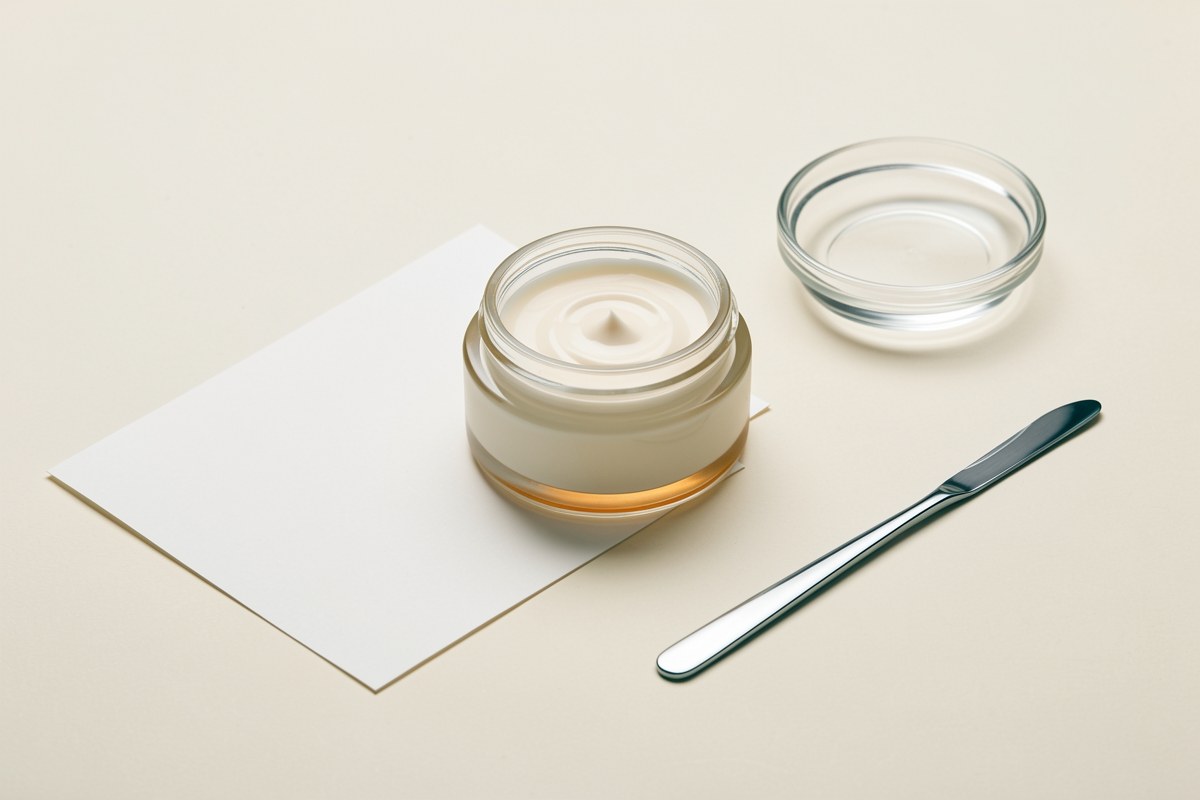
The major cost components behind a luxury skincare price
A luxury skincare price is not one line item. It is a bundle that typically includes packaging, advertising, influencer and celebrity partnerships, in-store beauty advisors, and global distribution. Ingredient cost is only one part of the total, which is why two products with overlapping ingredient lists can sit at very different price points.
Process-side costs are also part of the picture. Luxury skincare is often described as being built through extended research and development, ground-up formulation development and tighter process controls rather than as a scaled-up version of a mass-market template. One secondary explainer describes research and development as the single most significant cost driver, even though it is invisible to the shopper.
| Cost component | Examples or visible signals | How it affects the retail price |
|---|---|---|
| Packaging | Heavy glass, airless pumps, decorated components, rigid outer cartons | Raises the retail price through material and tooling costs, even when the formula overlaps with lower-priced alternatives. |
| Marketing and brand building | Advertising, influencer and celebrity partnerships, retail activation | Adds to the price by funding awareness and positioning rather than the formula itself. |
| Distribution and retail | International logistics, customs, retail shelf space, in-store beauty advisor staffing | Adds margin and service costs that are reflected in the shelf price. |
| Research and development | Formulation development, stability testing, process controls | Described as a significant cost driver even though it is invisible to the shopper. |
| Raw materials | Active ingredients at the grade and concentration the brand has chosen | Ingredient cost is one part of the total, not the whole explanation of the price. |
Sources: Beauty World News, Subtle Luxury Life, Luxernn
How to estimate what portion of the price reflects the formula
There is no publicly audited line-by-line cost breakdown that would let you calculate a precise formula share for a specific jar. What you can do is estimate which cost categories are likely to dominate using the product's own details. A heavy glass component, an airless pump and a rigid outer box point to packaging spending. A global advertising campaign and a celebrity ambassador point to marketing spending. A refillable system or a concentrated format changes the packaging-to-formula ratio over time.
Price bands can also give context. Across the luxury skincare market, prices are reported in a broad range of roughly $65 to $800 per bottle or jar depending on product type and brand positioning. Serums and concentrated treatments are reported to carry the highest per-ounce prices because they are associated with elevated active-ingredient concentrations, roughly 15 to 30 percent, compared with creams at roughly 3 to 8 percent. Those ranges are reported estimates from a commercial market research report, not audited industry figures, and individual products can fall outside them.
One further nuance: a reported price premium of up to about 40 percent over comparable mass-market alternatives applies specifically to prestige Asian brands expanding into North American and European channels. It should not be generalised to every luxury skincare product.
- Look at the container: heavy glass, airless pumps and elaborate outer boxes usually indicate a larger packaging share.
- Look at the campaign: global advertising, celebrity ambassadors and in-store advisory staff usually indicate a larger marketing share.
- Look at the format: serums and concentrated treatments are reported to carry higher per-ounce prices than creams.
- Look at the refill option: a refillable system can reduce the packaging share on repeat purchases.
- Treat all price and concentration figures as reported estimates, not as audited cost data.
Sources: DataIntelo, Beauty World News
Signals that a price is driven mainly by branding or packaging
Some luxury products justify their price through formulation and process choices, and some lean more heavily on presentation. The signals are usually visible in how the product is described and sold rather than in the ingredient list alone.
Exclusive, rare or patented ingredients such as 24-karat gold flakes, caviar, exotic oils or proprietary vitamin-and-mineral blends are common marketing differentiators. Their presence does not by itself establish that they improve outcomes, and a formula that leans on them without clear formulation details is more likely to be priced for positioning than for formula. Perceived effectiveness can also be partly a placebo effect produced by packaging and branding rather than the formula itself, which is another reason to weigh the presentation signals honestly.
The practical test is to ask what the price is doing. If the description leads with the story, the bottle and the ambassador, and says little about stability, concentration or delivery, the branding and packaging share is likely to be high.
- The narrative centres on rare or exotic ingredients without explaining their role in the formula.
- The campaign budget is visible through celebrity partnerships and heavy advertising.
- The packaging is the headline feature, such as gold-tone hardware or collector-style components.
- The scent, texture and ritual are emphasised more than the active profile.
- The brand story is repeated consistently but formulation specifics are scarce.
Sources: Evie Magazine, Beauty World News
How to compare two products on cost per use rather than sticker price
Sticker price tells you what you pay at checkout. Cost per use tells you what you pay each time the product reaches your skin. To estimate it, note the price, the size in millilitres or fluid ounces, and how much you actually use per application. Then divide the price by the number of applications you expect to get from the container.
The method works best as a side-by-side comparison. Apply it to the same category, not across categories, because a serum and a cleanser are used at different amounts and frequencies. A large bottle used generously twice a day can end up costing more per use than a smaller, more concentrated product used sparingly, even when the smaller product has the higher sticker price. Conversely, a low sticker price does not guarantee a low cost per use if the texture encourages heavy application or the packaging makes it hard to dispense the last portion.
Because product sizes and usage amounts vary, treat cost per use as a consumer method rather than a fixed formula. The goal is to see the order of magnitude and to avoid comparing a five-millilitre sample with a hundred-millilitre bottle as if the sticker prices were directly comparable.
- Write down the full price and the size in millilitres or fluid ounces.
- Estimate how many applications the container will realistically give you, based on how much you use each time.
- Divide the price by the number of applications to get an approximate cost per use.
- Repeat for the second product using the same usage assumption.
- Compare the two cost-per-use figures and note whether the difference changes your choice.
Sources: Beauty World News, DataIntelo
A practical checklist for deciding whether a product is worth the price
Use this checklist before buying, and again after a few weeks of use. It is designed to keep the decision on formulation quality rather than on the prestige tier of the brand, which is where the deciding factor should sit when the question is whether luxury skincare is worth the price.
A common value strategy is to mix categories rather than to buy everything at the same tier. For example, a drugstore cleanser and sunscreen can sit alongside a mid-range or luxury treatment serum and an affordable daily moisturiser. That mix keeps the treatment step where the formulation is most likely to matter while keeping the routine steps that are mostly about cleansing and protection at a lower cost.
Luxury pricing is most defensible in specific situations: specialised anti-aging treatments, patented delivery technologies, products formulated for highly sensitive or reactive skin, and products with long-term clinical data supporting their claims. If a product does not fall into one of those categories, the case for the premium is weaker.
- Can you name the active ingredients and the role each one plays?
- Does the brand describe stability, concentration or delivery, or only the story and the packaging?
- Does the product address a specific concern you actually have, rather than a general aspiration?
- Is the cost per use within the range you are comfortable spending on that step?
- Is there a mid-range option with the same active class and a clearer formulation explanation?
- Does the product fall into a situation where luxury pricing is most defensible, such as a specialised treatment or a formula for reactive skin?
- Will you use it consistently enough for the price to translate into a real routine rather than an occasional purchase?
Sources: Beauty World News, Flority, DataIntelo
Frequently asked questions
Does a higher price mean a higher concentration of active ingredients?
Not automatically. Mass-market and luxury products can use the same actives, and luxury formulations are often described as differentiating on stability, concentration and sensory experience rather than on ingredient class alone. Some luxury serums and concentrated treatments are reported to carry elevated active concentrations, roughly 15 to 30 percent, compared with creams at roughly 3 to 8 percent, but those ranges are broad reported estimates and are not universal across every luxury product.
Sources: Beauty World News, DataInteloAre luxury skincare products priced mainly because of better ingredients?
Ingredient cost is only one part of the price. Luxury prices also reflect packaging, advertising, influencer and celebrity partnerships, in-store beauty advisors and global distribution, and one secondary explainer describes research and development as the single most significant cost driver even though it is invisible to the shopper. That does not mean ingredients are irrelevant, but it does mean the ingredient list alone is not a complete explanation of the price.
Sources: Beauty World News, LuxernnHow can I compare cost per use between two products?
Write down the price and the size of each product, estimate how many applications you will realistically get from each container based on how much you use per application, and divide the price by that number. Compare the two cost-per-use figures using the same usage assumption. Because product sizes and usage amounts vary, treat the result as an approximate consumer method rather than a fixed formula, and compare products within the same category rather than across categories.
Sources: Beauty World News, DataInteloWhen is a mid-range product likely to be a better value?
A mid-range product is often the better value when it uses the same active class as the luxury option, when your main need is a basic step such as cleansing or daily moisture, or when the luxury price is driven mainly by packaging and brand narrative rather than by formulation detail. A practical value strategy can combine categories, for example a drugstore cleanser and sunscreen with a mid-range or luxury treatment serum and an affordable daily moisturiser, so that the premium is reserved for the step where formulation matters most to you.
Sources: Beauty World News, FlorityIs expensive skincare always more effective than a cheaper alternative?
No. Perceived effectiveness can be partly a placebo effect produced by packaging and branding rather than the formula itself, and effective skincare depends on consistent daily use, proper layering order, sun protection and realistic expectations rather than on price tier alone. Price can reflect real process costs such as research and development or stability work, but it is not a reliable stand-alone measure of how well a product will work for you.
Sources: Evie Magazine, Beauty World NewsWhat are the signs that a premium price is mostly about packaging or branding?
Common signs include a description that leads with rare or exotic ingredients such as gold flakes or caviar without explaining their role, a visible celebrity or influencer campaign, packaging that is the headline feature, and a strong emphasis on scent, texture and ritual rather than on active profile or formulation detail. None of these signals is proof on its own, but together they suggest that a larger share of the price is going to presentation and positioning rather than to the formula.
Sources: Evie Magazine, Beauty World NewsAre there situations where a luxury price is more defensible?
Yes, in a few specific situations. Luxury pricing is most defensible for specialised anti-aging treatments, patented delivery technologies, products formulated for highly sensitive or reactive skin, and products with long-term clinical data supporting their claims. If a product does not fall into one of those categories, the case for paying a premium is weaker and the same budget may go further elsewhere in the routine.
Sources: Beauty World News, FloritySources
- Drugstore vs Luxury Skincare: When Affordable Beauty Products Make More Sense — Beauty World News
- Luxury vs. Budget: Are Expensive Skincare Products Actually Worth The Price Tag? — Evie Magazine
- Luxury Skincare Market Research Report 2033 — DataIntelo
- Why Luxury Skincare Costs So Much — And What You’re Really Paying For — Subtle Luxury Life
- Decoding the Price Tag: What Makes Luxury Skincare So Expensive? — Luxernn
- Luxury Skincare: Are Expensive Products Worth the Price? — Flority — Flority